


.svg)

.svg)


Authoring tool comparison: dominKnow | ONE vs Xyleme



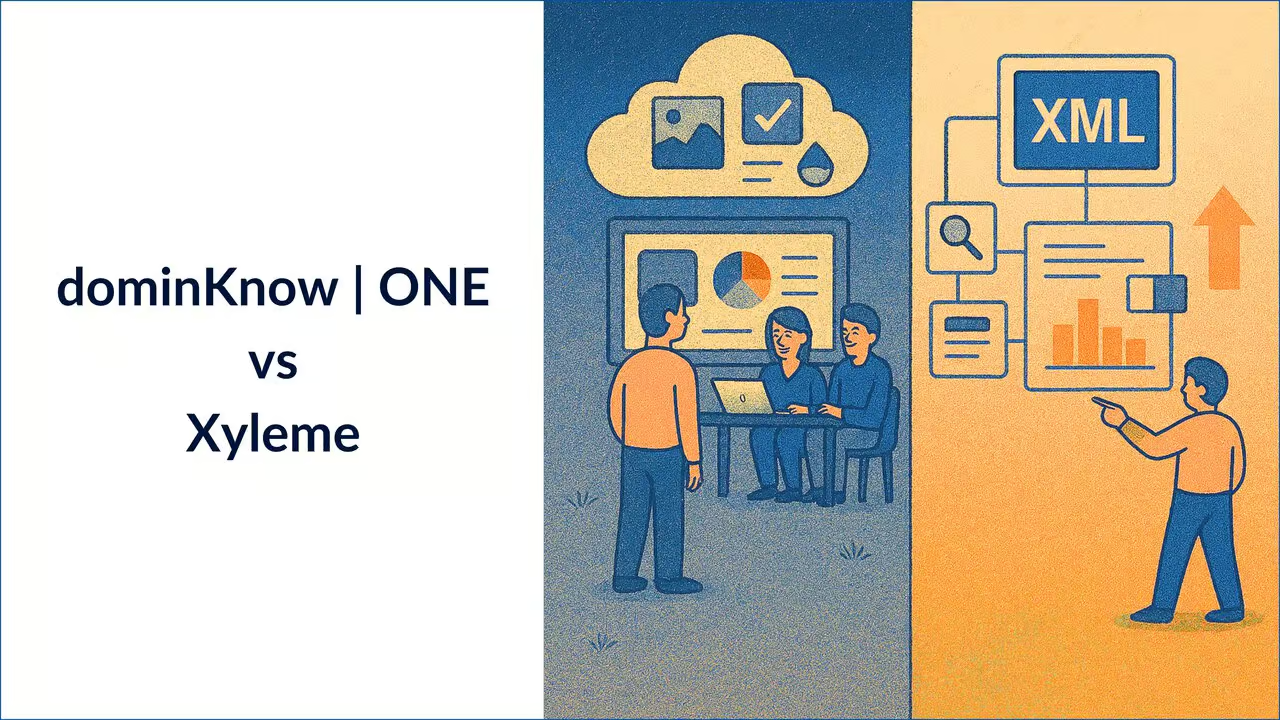
Comparing dominKnow | ONE and Xyleme for your next content authoring or LCMS investment? You’re in the right place! Below, we’ll explore the key differences between dominKnow | ONE, an all-in-one cloud-based LCMS, and Xyleme, an enterprise content management and delivery system.
If you’re researching learning content management systems (LCMSs) or eLearning authoring tools, dominKnow | ONE and Xyleme have likely come up in your search so far as two of the most popular Learning Content Management Systems – and with good reason. Both are well-established solutions that help learning teams create, manage, and distribute digital learning content at scale.
But there are some key differences that will likely make one more suitable than the other for your unique use case. In this article, we’ll break down the strengths of each platform, from ease of use and collaboration to scalability and flexibility, to help you decide which tool best fits your organization’s learning strategy.
What is dominKnow | ONE?
dominKnow | ONE is an all-in-one learning content management system (LCMS) that brings together authoring, collaboration, and publishing in a single cloud-based platform.
It supports both traditional eLearning and fully responsive content, making it suitable for a wide range of learning formats, from formal courses to performance support materials. Learning activities range from simple quizzes to comprehensive software simulations, supporting use cases such as onboarding, compliance, and product training.
Built for teams, dominKnow | ONE enables real-time collaboration, version control, and centralized asset management to streamline large-scale content development.
What is Xyleme?
Xyleme is a learning content management system (LCMS) focused on creating, managing, and distributing modular, reusable learning content across multiple channels.
It’s particularly strong in enterprise settings where learning content must be updated, personalized, and delivered across systems at scale. It’s considered a content management-first platform, as opposed to the authoring-first dominKnow | ONE.
Xyleme’s main strength lies in its structured, XML-based content model, which allows organizations to manage complex content ecosystems efficiently, as well as easy content reuse and reformatting.
Is dominKnow | ONE or Xyleme easier to use?
dominKnow | ONE generally has a shorter learning curve for authors, offering a visual, WYSIWYG interface that feels familiar to content authors used to other modern eLearning tools. It includes built-in templates, themes, and responsive layouts that help non-technical authors produce professional content quickly.
Xyleme, by comparison, is more technical and configuration-heavy, requiring upfront setup and understanding of its content structure. Most authors then utilize a fairly structured document which keeps them on “rails” but does limit any additional creativity or variance. While this provides long-term control and flexibility, it can make initial adoption slower for new users or smaller teams without dedicated learning technologists or for ones who desire more individual creativity between projects.
Neither is “hard” to use, but for most eLearning authors, dominKnow | ONE will likely be the easier and more intuitive option.
Does dominKnow | ONE or Xyleme better support collaboration?
Both dominKnow | ONE and Xyleme are designed for team-based content management and both are cloud based solutions, but they differ in focus.
dominKnow | ONE supports real-time, in-platform collaboration, allowing multiple authors, reviewers, and SMEs to work simultaneously with built-in commenting, review note resolution, and version tracking. All users, with permission, access the latest version, with no confusion around outdated files.
Xyleme also supports collaboration, but leans toward workflow-driven content governance, offering approval processes, role-based permissions, and publishing workflows suited to complex enterprise environments. Much like dominKnow | ONE, Xyleme is based on a centralized content repository, with concurrent editing and built-in review processes.
So, dominKnow | ONE excels for day-to-day collaboration, while Xyleme is a good choice for highly granular, enterprise-wide content oversight and control.
Does dominKnow | ONE or Xyleme have the faster content production speed?
For most authoring teams, dominKnow | ONE enables faster content creation thanks to its ready-made templates, responsive design options, and real-time co-authoring capabilities. Authors can reuse assets, themes, and learning objects without leaving the platform, dramatically cutting production time.
Additionally, with its built-in accessibility features, ability to manage multiple language translations within a single eLearning course, and single-sourcing approach to courses and assets for easy reuse, dominKnow | ONE is designed with speed in mind throughout the entire content authoring and management process.
Xyleme on the other-hand can be faster once the design approaches are developed and the templates implemented. Authors then follow a fairly tight approach to their content development and, like dominKnow | ONE, they can take advantage of reuse and single source design. Further, once your content structure is in place, updates cascade automatically across all outputs and delivery channels. Detriments to speed primarily occur when variations to the primary design are needed or the content can’t be easily made to fit the standard approach.
Is dominKnow | ONE or Xyleme more flexible?
dominKnow | ONE offers flexibility through its dual authoring modes: Claro for traditional slide-based eLearning, and Flow for responsive content. plus its ability to publish to multiple digital channels, such as LMSs, intranets, and websites along with single-source tagging. It’s well suited to creating varied learning experiences without heavy technical setup.
Xyleme’s flexibility comes in the form of its content structure and delivery, which allows granular control over content components and how they’re assembled and distributed. With Xyleme, it’s less about the visual design flexibility of content delivered over multiple output formats such as eLearning courses, word documents, and powerpoint.
Is dominKnow | ONE or Xyleme more scalable?
Both tools are built for scalability, but in different ways.
dominKnow | ONE supports scalability through shared assets, single sourcing, and cloud-based authoring, enabling teams to manage large libraries and multiple versions of the same content efficiently. The ability to manage multiple course translations within a single file also supports global scalability, as it significantly reduces content admin. Last, authors are able to easily adjust their learning materials and create highly engaging experiences with the powerful built-in authoring.
Xyleme is also designed for enterprise-level scalability, particularly when distributing learning content across multiple systems and audiences. Its structured content model allows for extensive reuse, localization, and publishing to a wide range of outputs. Where its scaling approach can trip up is when the team decides to bypass their built in authoring capabilities, using outside tools, such as Articulate Storyline, to create their content. This then moves the “management” level up to projects. While the authors accomplish their previously unattainable goal of a highly engaging experience, this ends up circumventing many of the management and scaling capabilities that Xyleme provides, thus resulting in a bit of a catch-22.
Both dominKnow | ONE and Xyleme offer highly scalable authoring and content management experiences, making both suitable for large organizations seeking enterprise-level solutions, but how effectively your team can utilize these capabilities often depends on your ultimate content design and development needs and approach.
Who are dominKnow | ONE and Xyleme best suited to?
dominKnow | ONE is best for learning teams that want to create, manage, and update eLearning content collaboratively and efficiently. It suits organizations looking for a single, cloud-based tool that combines authoring and content management without requiring deep technical expertise. dominKnow | ONE is a strong choice for content authoring, management, and publishing, providing larger learning teams with a single, streamlined platform that does it all.
Xyleme is suited to large enterprises or content operations teams that need to maintain particularly complex learning ecosystems, often spanning multiple delivery platforms, languages, and audiences. It’s ideal where long-term content reuse and structured governance are critical priorities and highly diverse and interactive content is a lower priority.
Which LCMS or eLearning authoring tool should I choose?
Choosing between dominKnow | ONE and Xyleme depend on the scale and structure of your learning operations and content design needs.
dominKnow | ONE
- Ideal for teams creating and managing eLearning at scale
- Combines authoring, content management, review, and publishing in one cloud-based platform
- Enables real-time collaboration and content reuse across multiple projects and formats
- Provides a powerful and flexible easy to use authoring experience
Xyleme
- Purpose-built for managing, updating, and distributing content across multiple systems and audiences
- Uses an XML-based content model for powerful version control and dynamic publishing
- Best suited for organizations prioritizing content governance, localization, and multichannel delivery
- Provides a template based approach to authoring prioritizing a set of standardized approaches for your learning experiences.
As always, choosing the best LCMS or authoring tool for your needs isn’t an exact science. The right LCMS or authoring tool depends on each learning team’s unique structure and priorities. If you need an all-rounder that handles content authoring, management, and publishing with ease, dominKnow | ONE is likely to be a good choice. If your organization has particularly complicated content management and governance requirements, Xyleme could be the right fit.
Want to see dominKnow | ONE in action and find out how it compares to Xyleme? Schedule a demo to see it in action!